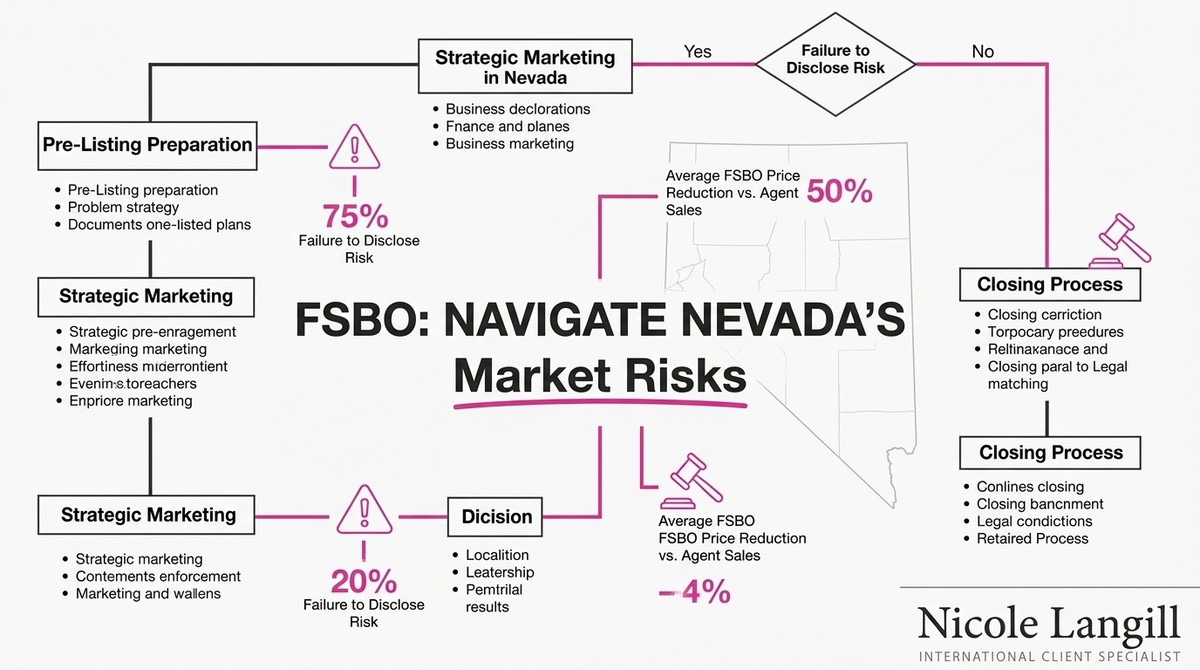
The Nevada For Sale By Owner (FSBO) Checklist For Selling Your Home
Navigating the real estate market without representation requires a deep understanding of contracts, marketing, and negotiation. Many homeowners consider handling the transaction themselves to minimize expenses. Following a strict Nevada FSBO checklist is the only way to manage the complex logistics involved. Success depends on a refined approach that protects both your financial interests and your legal liability.
Table of Contents
Market Data And Your Nevada FSBO Checklist
A core component of your Nevada FSBO checklist must be objective market analysis. Properties do not sell based on a seller’s emotional attachment or the amount spent on previous renovations. Achieving the highest return depends on accurate pricing aligned with current market conditions. Sellers must analyze recent comparable sales and active inventory to understand their competitive edge.
Failing to interpret the data correctly often leads to extended days on the market. Buyers are highly educated and will quickly identify properties that do not match the surrounding neighborhood metrics. It is critical to review broad market trends before listing your property. You can review current valuation trends by exploring this guide on whether your Las Vegas Valley home is worth more or less than last year.
Comprehensive Pre-Listing Preparation
Preparing a home for the public goes far beyond basic cleaning and decluttering. The property must be positioned for the right audience through deliberate strategy. This involves identifying minor defects that could deter potential buyers during a showing. Completing necessary repairs beforehand prevents buyers from requesting outsized credits during the inspection period.
Staging the home is another crucial element for maximizing buyer interest. The goal is to create a neutral environment where buyers can envision their own lifestyle. Professional staging highlights architectural features while minimizing any awkward floor plan quirks. For insights on preparing a property for the modern buyer, read this overview regarding what to know about selling a Las Vegas home in 2026.
Strategic Marketing And Property Positioning
Putting a sign in the yard is no longer sufficient to attract qualified buyers. A robust marketing strategy requires professional photography, virtual tours, and targeted digital campaigns. Most buyers start their search online and make immediate judgments based on visual presentation. Missing this step severely limits the audience and decreases the probability of multiple offers.
Effective syndication ensures the listing reaches local, out-of-state, and international buyers. Moving across borders or state lines involves complex logistics, meaning relocating buyers rely heavily on comprehensive digital media. Reaching this demographic demands a sophisticated presentation. Review these successful luxury real estate marketing examples to understand the caliber of presentation required to stand out.
Navigating Legal Disclosures And Paperwork
The legal requirements of selling a home in Nevada are extensive and strict. The Seller Real Property Disclosure form must be completed accurately to avoid future liability. Failing to disclose known material defects can result in severe financial penalties or litigation long after closing. The burden of compliance rests entirely on the homeowner when operating without professional representation.
Homeowners association documents represent another significant hurdle during the transaction. Sellers must provide buyers with a complete resale package within specific timeframes to comply with state law. Delays in ordering or delivering these documents give the buyer a legal right to cancel the contract. Managing these timelines meticulously protects the transaction from falling apart at the last minute.
Evaluating The Real Risks Of Unrepresented Sales
One of the most significant risks involves negotiating directly with buyers or their representing agents. Skilled negotiation requires a clear-eyed look at the numbers and an objective separation from the property. Homeowners often struggle to remain impartial when buyers criticize their home to justify a lower offer. This emotional involvement frequently leads to concessions that erode the final net profit.
Unqualified buyers also present a major threat to a successful sale. Without a dedicated professional vetting incoming offers, sellers may accept contracts from individuals incapable of securing financing. Removing a home from the market for an unqualified buyer wastes valuable time and taints the listing history. Verifying proof of funds and speaking directly with lenders is an absolute necessity.
Safety and security are commonly overlooked concerns during unrepresented transactions. Inviting strangers into your home for private showings requires careful screening protocols. Agents typically require identification and pre-approval letters before scheduling a tour. Sellers must establish their own stringent security measures to protect their family and their belongings.
The Financial Reality And Overpricing Risks
Many sellers focus strictly on saving the commission fee without calculating the net proceeds. Statistics consistently show that professionally represented homes sell for a premium compared to owner-managed listings. The theoretical savings are often wiped out by a lower gross sales price and poorly negotiated terms. True success comes from understanding the specific variables that drive value rather than focusing solely on upfront costs.
Setting the initial price too high is the most common and damaging mistake made by sellers. An inflated price tag alienates the target audience and causes the property to stagnate on the market. Buyers eventually assume something is wrong with the home when it sits unsold for months. You can learn more about the financial consequences by reading about the true cost of overpricing your Las Vegas Valley home.
Managing The Closing Process
The period between accepting an offer and closing the sale is fraught with potential complications. The buyer will conduct independent inspections, which often lead to a second round of intense negotiations. Navigating repair requests requires an understanding of what is reasonable and what is simply a tactic to reduce the price. Sellers must defend their proceeds while keeping the buyer committed to the transaction.
Appraisals introduce another layer of risk if the buyer is obtaining a mortgage. If the property appraises below the purchase price, the transaction could stall entirely. Sellers must be prepared to provide the appraiser with relevant data to support the agreed-upon value. Successfully managing a low appraisal requires tactful renegotiation or the willingness to return to the active market.
Frequently Asked Questions
Buyers and sellers often have similar concerns when navigating unrepresented transactions. It is important to address these issues proactively to ensure a smooth transition. The following answers clarify common misunderstandings regarding the selling process in Nevada. Every detail matters when the goal is protecting your financial interests.
What legal documents are required for a Nevada seller?
Sellers must provide a completed Seller Real Property Disclosure form detailing the condition of the home. Properties located within an HOA also require the delivery of a comprehensive resale package to the buyer. Additional documentation includes the lead-based paint disclosure for older homes and the standard purchase agreement. Managing this paperwork accurately is vital to avoid post-closing legal disputes.
How can I ensure potential buyers are financially qualified?
You must demand a verified pre-approval letter from a reputable lender before accepting any offer. Cash buyers should provide current bank statements or a certified letter proving sufficient liquid funds. It is highly recommended to contact the loan officer directly to confirm the buyer has undergone underwriting review. Skipping this step often leads to failed escrows and lost marketing time.
Do buyers prefer working directly with homeowners?
Most buyers are represented by their own agents who prefer dealing with other industry professionals. Unrepresented sellers can create friction because the buyer’s agent often ends up doing twice the work to keep the transaction moving. Some buyers also feel uncomfortable negotiating directly with the owner due to the emotional nature of the transaction. Professional representation creates a helpful buffer that keeps all parties focused on the objective terms of the deal.
Are open houses effective for unrepresented sellers?
Open houses occasionally attract direct buyers, but they primarily serve as a gathering place for curious neighbors. Serious buyers rely on scheduled private showings to evaluate a property comprehensively. Hosting an open house also exposes the property to security risks if visitor traffic is not closely monitored. A targeted digital marketing campaign yields significantly higher returns than relying solely on foot traffic.
Final Thoughts On Property Positioning
Selling a home successfully requires a comprehensive understanding of contracts, marketing channels, and negotiation strategies. While eliminating professional fees appears attractive on paper, the logistical and financial risks are substantial. Properties are positioned for the right audience through deliberate strategy, not just a listing on a public website. Securing expert guidance ensures a transition that maximizes your final net proceeds while minimizing your stress.