A Complete Guide to Home Sale Net Proceeds and Taxes
Selling a property in today’s market demands absolute financial clarity. You must know exactly what you will walk away with after the transaction closes. Accurately projecting your home sale net proceeds allows you to make informed decisions about your next purchase. Guesswork has no place in real estate transactions involving substantial equity.
Defining the Financial Outcomes
Gross sale price is just the starting point of your financial calculation. Your actual take-home amount requires subtracting a series of specific transaction costs. These deductions include mortgage payoffs, agent commissions, and standard closing fees. Understanding this math early prevents unpleasant surprises at the closing table.
Many sellers mistakenly look at their current equity and assume that number equals their final profit. This oversight can severely impact their purchasing power for their next residence. A detailed net sheet provides a realistic view of your financial standing. You should review this document with your real estate professional before finalizing any listing agreement.
Deductions Lowering Home Sale Net Proceeds
The most significant deduction from your gross price is typically your outstanding mortgage balance. You must also account for any secondary loans or home equity lines of credit tied to the property. Your title company will request a formal payoff statement to determine the exact amount owed on the day of closing. This ensures all liens are cleared before the title transfers to the new buyer.
Real estate commissions represent another major component of your transaction costs. These fees compensate the professionals who market your property, negotiate terms, and manage the complex logistics of the sale. While commission structures vary, they are calculated as a percentage of the final sale price. This investment directly influences the final presentation and competitive positioning of your asset.
Closing costs encompass several specific fees related to the legal transfer of property. You will encounter charges for title insurance, escrow services, and local transfer taxes. These customary fees protect both parties and guarantee a clean transfer of ownership. Your escrow officer will detail every charge on the final settlement statement.
Seller concessions and repair credits can further alter your final calculations. Buyers may request closing cost assistance or financial credits in lieu of physical property repairs. Negotiating these requests requires a strategic approach to protect your bottom line. Proper pricing from the start minimizes the leverage buyers have to demand excessive concessions, helping you avoid the true cost of overpricing a property.
The Basics of Capital Gains Tax
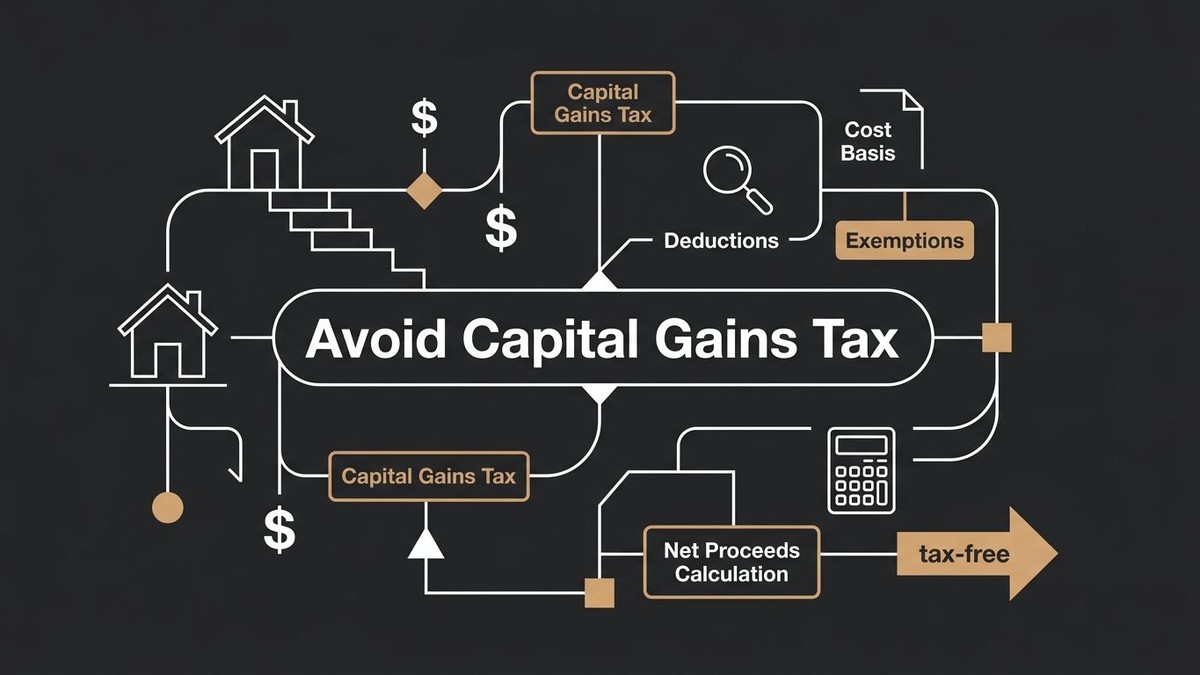
Profit from the sale of real estate is often subject to federal taxation. The Internal Revenue Service views this profit as a capital gain, defined as the difference between your adjusted basis and your realized amount. Your adjusted basis is your original purchase price plus any qualifying capital improvements made over the years. Routine maintenance does not increase your basis, but adding a new roof or a complete kitchen remodel certainly will.
The duration you hold the property dictates the specific tax rate applied to your gains. Short-term capital gains apply to assets held for one year or less and are taxed as ordinary income. Long-term capital gains apply to assets held for more than one year, benefiting from lower, preferential tax brackets. Structuring your sale to qualify for long-term rates is a fundamental wealth preservation strategy.
The Section 121 Tax Exclusion
The federal government offers a substantial tax benefit for individuals selling their primary residence. Section 121 of the tax code allows single filers to exclude up to $250,000 of profit from capital gains tax. Married couples filing jointly can exclude up to $500,000 of profit. This powerful exclusion allows homeowners to build and retain significant wealth through primary homeownership.
To qualify for this exclusion, you must meet the ownership and use tests established by the IRS. You must have owned the home and used it as your principal residence for at least two of the five years preceding the sale. These two years do not need to be consecutive, providing flexibility for those with shifting living arrangements. Documenting your residency through utility bills and voter registration is highly recommended.
Certain exceptions exist for homeowners who cannot meet the strict two-year requirement. Relocations for work, severe health issues, or unforeseen circumstances may allow for a partial exclusion of your gains. Navigating these exceptions requires consultation with a qualified tax professional. Ensuring compliance with IRS guidelines is paramount when navigating the 2026 real estate market.
Protecting Investment Property Profits
Selling a rental or investment property introduces a completely different set of tax rules. The Section 121 exclusion does not apply to properties held strictly for investment purposes. Instead, investors face capital gains taxes and potential depreciation recapture taxes upon a successful sale. These tax liabilities can significantly erode the profit margin of your real estate portfolio.
A 1031 exchange offers a legitimate pathway to defer these burdensome taxes. This section of the tax code allows you to roll the equity from a relinquished property directly into a new replacement property. The transaction must meet strict timelines, including identifying a replacement within 45 days of closing. Executing this strategy properly requires coordination with a qualified intermediary when optimizing investment property returns.
Calculating Your Adjusted Cost Basis
Minimizing your taxable gain begins with accurately calculating your adjusted cost basis. You must track all major improvements that add value to the home or prolong its useful life. Building an addition, installing a swimming pool, or upgrading the HVAC system all qualify as basis-increasing improvements. Keeping meticulous records and receipts for these projects is absolutely essential.
Deductible selling expenses also play a crucial role in lowering your total taxable gain. The commissions paid to real estate professionals, advertising costs, and legal fees directly reduce your realized amount. By maximizing both your cost basis and your deductible expenses, you shrink the taxable portion of your profit. This disciplined approach ensures you only pay taxes on your actual net gain.
Avoiding Common Financial Missteps
Many sellers underestimate the financial impact of prorated property taxes and homeowners association dues. These ongoing costs are calculated down to the exact day of closing, shifting responsibility from seller to buyer. Failing to account for these prorations can result in an unexpected reduction in your final payout. A professional escrow team ensures these numbers are balanced perfectly on the settlement statement.
Another frequent error involves miscalculating the impact of specialized local tax assessments. In many transactions, the buyer expects the seller to pay off these municipal assessments completely at closing. If you agree to this term during negotiations, it directly reduces your final take-home cash. Reviewing all local tax obligations before listing your property prevents costly concessions later in the process.
Strategic Planning for Relocators
Moving to a new state introduces additional layers of financial complexity. When departing high-tax states, timing your sale and residency shift is critical to maximizing your retained equity. Establishing your new domicile properly can shield your ongoing income from previous state tax obligations. Coordinating the logistics of two simultaneous transactions demands precision and understanding the financial implications of state-to-state moves.
Buying a new property before your current home sells presents unique cash flow challenges. Bridge loans or leveraging your current equity can provide the necessary capital, but they involve additional fees and interest. Accurately projecting your upcoming payout ensures you do not overextend yourself on the replacement property. Relying on professional market data rather than online estimates is the only way to forecast these figures reliably.
Market Dynamics and Valuation
The broader real estate market directly influences your ability to maximize your final payout. Low inventory levels generally favor sellers, allowing for firmer negotiations and fewer repair concessions. Conversely, a saturated market requires more aggressive pricing and potentially higher marketing investments. Understanding these macroeconomic trends helps you set realistic expectations for your final net sheet.
Automated online valuation tools rarely provide the nuanced accuracy required for serious financial planning. These algorithms cannot account for specific property upgrades, micro-neighborhood trends, or current buyer sentiment. A custom comparative market analysis provides the precise data needed to establish a competitive listing price. This exact valuation serves as the foundation for all subsequent financial calculations.
Navigating Contract Contingencies
Contract contingencies protect buyers but can introduce uncertainty into your financial projections. Appraisal contingencies require the property to value at or above the agreed purchase price. If an appraisal falls short, you may face requests to reduce your price or risk a canceled contract. Structuring counter-offers to limit these risks preserves the integrity of your projected payout.
Inspection contingencies present another potential hurdle before reaching the closing table. Buyers often use physical inspection reports to renegotiate terms or demand costly repairs. Anticipating these requests and addressing deferred maintenance before listing strengthens your negotiating position. Maintaining control during the inspection period is critical to protecting your initial financial targets.
Finalizing Your Transaction Strategy
Every real estate transaction is distinct, featuring unique variables that affect your bottom line. Securing top dollar requires a refined marketing approach tailored to the specific strengths of your property. Accurate pricing, aggressive positioning, and skilled negotiation all contribute to a higher gross sale price. This comprehensive effort ultimately translates into larger payouts for you as the seller.
Partnering with an experienced professional transforms a stressful financial event into a controlled, strategic process. You need an advisor who understands local market dynamics and global standards of service. We focus on protecting your equity while delivering a seamless experience from consultation to closing. Proper planning today secures your financial foundation for tomorrow.
Reaching your real estate goals requires more than just listing a property on the open market. It demands a deliberate strategy focused on protecting your financial interests at every stage. If you are ready to evaluate your portfolio, please visit Nicole Langill to start the conversation. Securing your future wealth begins with an accurate assessment of your current assets.